
Top Stairs and Railings of Tucson
Tucson’s Best ADA Railing Contractor
One of the things that an expert railing contractor would tell you is that railings aren’t just optional add-ons. Depending on how your ramps or stairs are designed, you’ll need railings to keep your commercial property safe and compliant with the Americans with Disabilities Act (ADA). But will all your ramps need handrails? Does the number of steps matter when installing guardrails for stairs? These questions and more can be answered by our ADA railing company.
Why ADA Compliant Railings Matter for Every Tucson Property
The ADA is a federal law that ensures buildings and public spaces are accessible to everyone, including individuals with disabilities. The intention is to prevent falls and accidents (like all railings) but to do so while providing support for people of all abilities, including wheelchair users and folks with visual impairments. This set of rules is specific and strict but it’s in place for many reasons that help oversee safety and equitability. Broadly speaking, ADA compliance in railing design signals that your business values customer care and inclusivity.
Without proper ADA railings, imagine how difficult it would be for a customer with a wheelchair or an employee with limited mobility to access your property. And because ADA is part of the law, failing to meet its accessibility requirements can lead to fines, lawsuits, or even denied occupancy permits.
If your property is open to the public or used by employees, whether it’s an apartment complex, storefront, office, or school, it’s crucial to meet ADA standards for access. These include having ADA-compliant railings, not just at construction but throughout the life of the building.
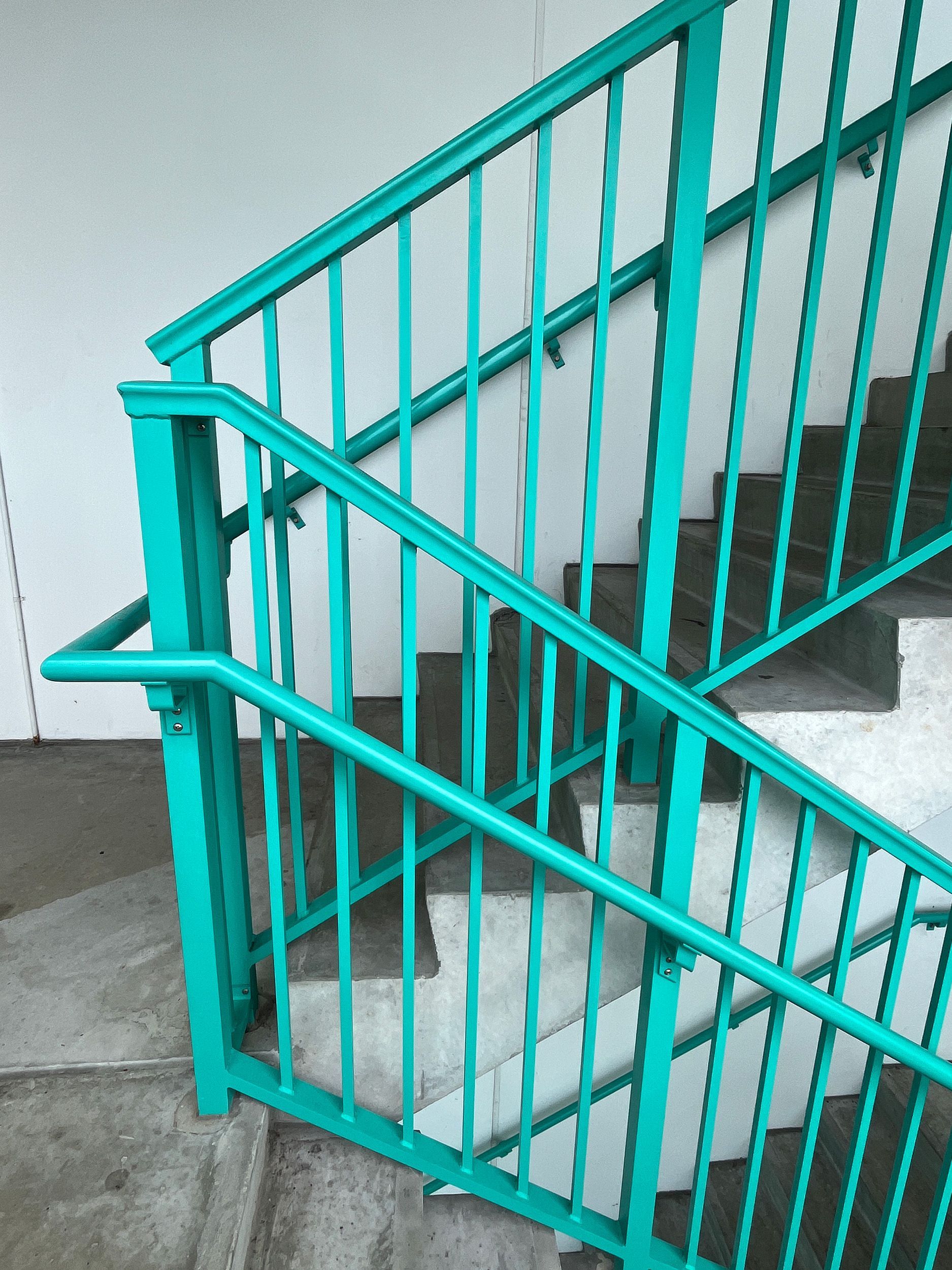
Difference Between Commercial Handrails and Guardrails
While not every square foot of a public-facing property needs metal railings, any area with stairs, ramps, or elevated walkways must have ADA commercial railings, depending on their designs. However, one common misconception is thinking that “handrails” and “guardrails” are the same. The two terms are not used interchangeably under ADA requirements.
In terms of purpose, handrails provide grip and support for people as they walk up and down the stairs or along ramps. Meanwhile, guardrails help prevent falls from elevated surfaces, such as the open side of a ramp, stair, or landing.
Think of it this way: a person using a knee brace will rely on ramp handrails to move safely between building levels. Handrails support movement. A school building with an elevated access ramp has guardrails on both sides to protect students using wheelchairs or small children from falling through the space below the handrail. Guardrails protect against falls. Many systems will use both elements combined to provide all of the features listed above.
In terms of placement, handrails can be mounted on the wall, and they usually run parallel to the walking surface (stair slope or ramp) and must be continuous for the full length of that run. On the other hand, guardrails are mounted directly to the walking surface, and they extend vertically upward to serve as a protective barrier. We can work on both handrails and guardrails for your property, or even create custom railings that combine both systems for enhanced safety and functionality.
Guidelines for ADA Guardrails on Ramps and Handrails for Stairs
After knowing the differences between handrails and guardrails and how important they are for your property, it makes sense to wonder about whether all ramps need handrails. According to ADA Section 505 (Handrails) and Section 405 (Ramps), not all ramps need handrails.
If the ramp’s vertical rise is more than 6 inches, it needs to have sturdy handrails on both sides for user support. Additionally, if the ramp edge sits more than 30 inches above the ground, you’ll also need guardrails for fall protection. As your handrail contractor, we can design railings that meet these standards, combining handrails and guardrails into one effective, compliant system.
Our ADA-compliant Tucson railings also feature:
- A handrail height between 34 and 38 inches, based on ADA Section 505.4. If children will be the main users of the handrail (as in schools), we can install a second set of handrails, with a lower handrail height, as recommended by ADA.
- A minimum distance of 1.5 inches between the gripping surface of handrails and the wall (behind them) or any adjacent surface, so the hand can easily wrap around.
- Continuous support for the full length of each stair flight or ramp run.
- Secure mounts with no sharp elements.
- Compliance with the ADA 12-inch extension rules, meaning we extend the handrails for 12 inches (horizontally) past the end of the slope to help users with balance and mobility.
For properties with stairs that are part of an accessible route used by the public or employees, handrails are also required regardless of the number of steps or total rise. Our team provides sturdy handrails for stairs following ADA requirements for height, graspable design, and clearance from walls. At the top of the stairs, we also extend the handrail 12 inches above the landing for a safe transition at the top.
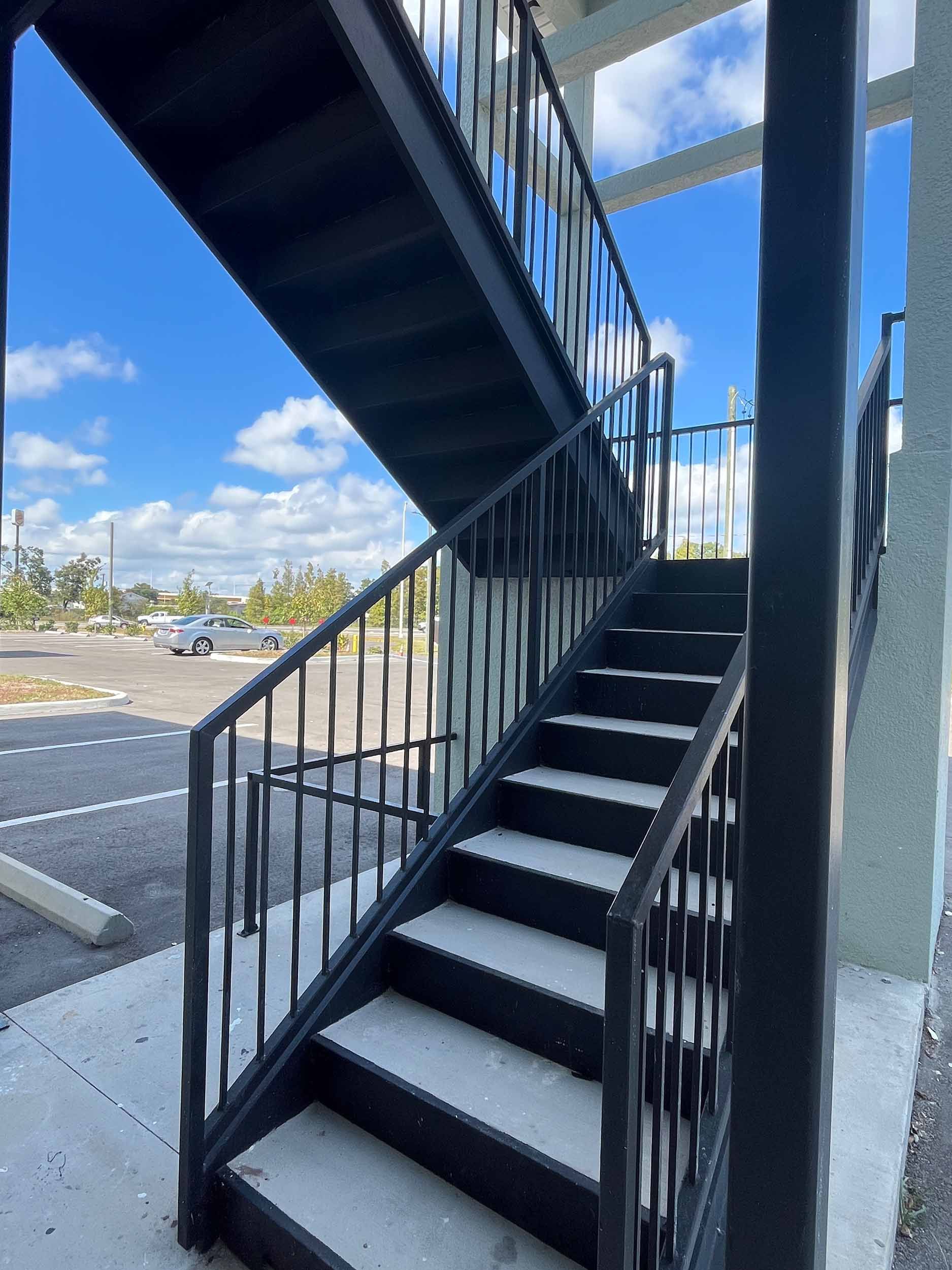
A safe bet for compliant handrails are the commonly used pipe railings or bar railings, which don’t necessarily have a tremendous amount of style but do meet compliance by providing support and ease of use while also serving as an affordable alternative to more designed rails. The metal bars that are used are referred to as Schedule 40 pipe and typically come in 1.5 inch or 1.25 inch diameter. The round railings work perfect to meet guidelines as stainless steel ADA railings or painted versions that look good outside any business or public space.
Ensuring Your ADA Railings in Tucson Will Pass Inspections
When it comes to ADA railings, passing inspections begins long before the installation. Meaning, it’s crucial for you to choose the right material and contractor to work with. Inspectors don’t just consider the height and extensions; they also check for durability and secure mounting.
At Top Stairs and Railings of Tucson, we use high-quality materials like aluminum and steel. Our aluminum railing has a corrosion-resistant finish that’s ideal for entryways and outdoor ramps. Meanwhile, our steel railing provides unmatched strength for commercial or high-traffic settings. When matched with our steel stairs, you get a high-strength structure that can withstand heavy use and enhance safety in your building.
Tucson’s Trusted ADA Railing Installer
Choosing us as your railing contractor and installer means you’ll get precise spacing, properly anchored systems, and smooth finishes, all of which inspectors look for in ADA handrails for ramps and stairs. From fabrication to installation, our team ensures every detail meets ADA standards as well as other building codes and regulations that govern your property. For all residents of Pima County, and the surrounding areas, contact us today at 520-658-2111 or through the
online form to discuss your ADA railing needs.